Conservation Process
The Conservation Center collaborates with a wide range of clients—including individuals, institutions, insurance professionals, and restoration companies—to preserve and restore fine art, antiques, and cultural heritage objects. Whether you need emergency Disaster Response, long-term treatment planning, collection assessments, or expert conservation for a single piece or entire collection, our team is here to help.

Initial Consultation
An initial consultation with a Client Services Associate allows The Conservation Center to review the condition of your piece and discuss potential treatment options. This meeting takes place prior to formal examination by a conservator and ensures your questions, concerns, and goals are fully addressed. If you have a deadline, please inform Client Services at the start of the project.
Testing & Examination
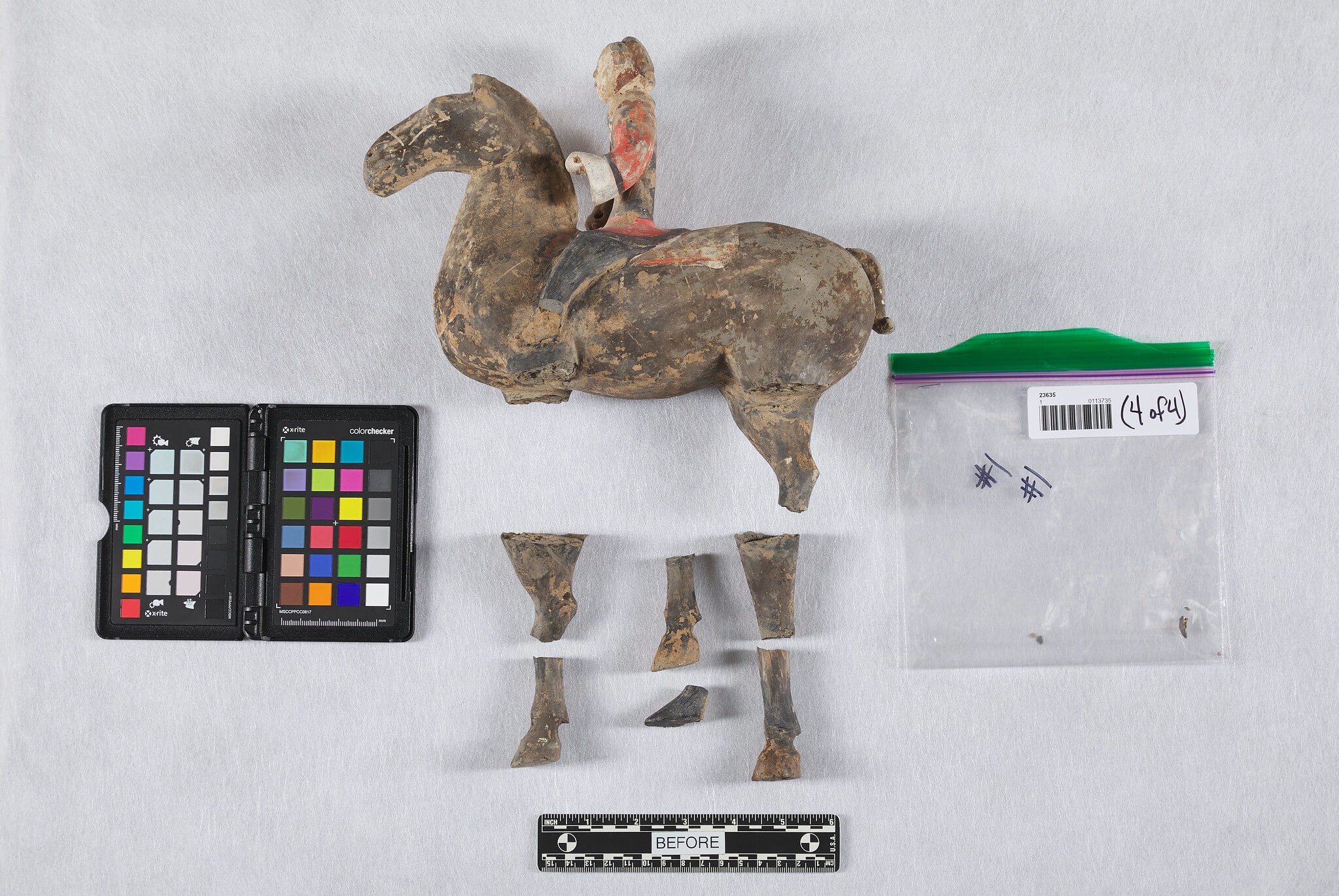
After the consultation, your piece will undergo testing in our conservation lab. A condition report and detailed treatment proposal will follow, outlining recommended methods, materials, pricing, and timelines. Framed items may be unframed for examination; if non-archival materials are present, reassembly may not be possible. In such cases, artwork and frames will be returned separately if treatment is declined. Wet or mold-affected pieces may be triaged immediately to stabilize the condition and prevent further damage.
Treatment Proposal & Authorization
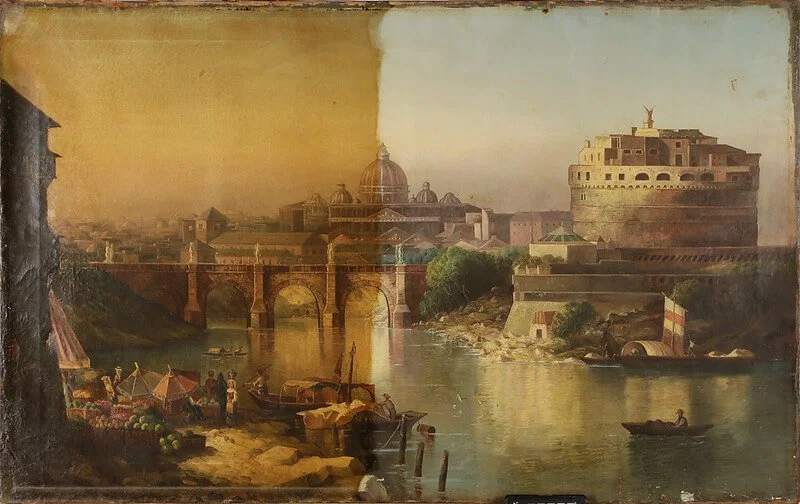
Following the examination and testing phase, The Conservation Center will provide a detailed treatment proposal. This document outlines the recommended conservation methods, materials to be used, itemized costs, and estimated timeline for treatment.
A Client Services Associate will reach out to review the proposal with you, answer any questions, and assist in selecting the most appropriate course of treatment for your needs. To authorize treatment, please sign and return the approval form included with the proposal. Written authorization and a deposit are required before conservation work can begin.

Treatment
After receiving your authorization, the conservation treatment will begin as outlined in the approved proposal. The timeline depends on the size, condition, and complexity of the work. Our conservators focus on stabilizing and preserving each piece using specialized materials and techniques. Throughout the process, Client Services will provide updates and notify you of any changes to the expected completion date.

Completion & Return
Upon completion of the conservation treatment, an invoice will be sent detailing the remaining balance. Once payment is received, Client Services will coordinate the return shipment or pickup of your artwork.
Frequently Asked Questions
-
To begin, contact Client Services to discuss your needs. We’ll guide you through transportation options, schedule delivery or pickup, and answer any preliminary questions. Once your piece arrives at The Conservation Center, it undergoes intake, examination, and documentation before a treatment proposal is sent for your approval.
-
Yes. To ensure proper intake and care, please schedule an appointment with Client Services before dropping off your artwork, furniture, or object. Appointments are available between 9:30am - 4pm, Monday – Friday, and must be confirmed with our team.
-
A thorough in-person examination is essential to accurately assess the condition of your artwork or object. Many conservation issues—such as surface instability, structural damage, or prior restoration—can only be properly identified through close physical inspection by a trained conservator.
Seeing the piece in person allows us to evaluate materials, techniques, and vulnerabilities, which directly inform the proposed treatment methods, timeline, and pricing. Without this examination, it's not possible to provide an accurate quote or estimated completion date.
Approximately 10 - 15 business days after the in-person assessment, you'll receive a detailed treatment proposal outlining recommended conservation work, estimated costs, and an anticipated timeline for completion.
-
Each proposal includes a condition report, recommended conservation methods and materials, estimated treatment time, and a detailed cost breakdown. It also outlines additional charges such as handling, shipping, assessment, and storage fees.
-
We offer nationwide transportation solutions through trusted shipping partners and in-house art handlers. Contact Client Services at (312) 944-5401 for assistance.
-
Yes. The Conservation Center’s Disaster Response Team can assist with on-site triage, inventory, packing, and transportation of collections affected by fires, floods, or other emergencies. For 24-hour emergency response, please call (773) 673-8104.
-
We conserve a wide variety of artworks and objects, including paintings, works on paper, photographs, textiles, furniture, sculpture, frames, mixed media pieces, and decorative arts. If you're unsure whether we can help with a specific item, contact Client Services for more information.
-
Yes. We work with items of both sentimental and monetary value. Whether your piece is a family heirloom or a high-value artwork, it will receive the same meticulous care and attention.
-
Treatment is priced based on an hourly rate and the materials required. Each treatment proposal includes an itemized breakdown of services after examination and testing. Because every piece is unique, the cost will vary depending on complexity and condition.
-
Yes. We can provide standalone condition reports for documentation, insurance, or legal purposes.
-
To avoid ethical conflicts of interest, we do not provide appraisals or authenticate artwork. However, we can help you connect with a qualified independent appraiser through professional organizations like the American Society of Appraisers or the International Society of Appraisers.
-
Artwork is housed in our secure, climate-controlled facility and protected with museum-quality, archival materials. Storage fees are assessed per item per month based on size and begin 15 days after your treatment proposal or final invoice is issued.
-
The Center maintains comprehensive fine arts insurance coverage, however; we recommend that clients maintain their own insurance during transport and treatment, as our coverage serves as a secondary policy and is not directly covering specific works in our care.
-
A career in art conservation requires a strong foundation in art history, studio art, and the sciences—particularly chemistry. Most conservators complete graduate training in conservation, which involves coursework, lab work, and hands-on internships.
To learn more about the field, explore educational paths, and find accredited programs, visit the American Institute for Conservation (AIC). The AIC provides valuable resources for aspiring conservators, including guidelines for pre-program experience, mentorship opportunities, and training requirements.
-
Our conservation labs are not open for public tours, as they are active workspaces where delicate treatments take place under strict environmental conditions. However, The Center occasionally hosts private events, lectures, and educational programs. Follow us on social media or subscribe to our newsletter for updates on upcoming opportunities to engage with our team and learn more about the conservation process.
“The Conservation Center worked quickly and professionally during EXPO CHICAGO this year and made us feel extremely comfortable. The Conservation Center was upfront and honest about the work, the price, and the return date, and everything happened seamlessly. As a result, we were able to get our art back in time to sell it on opening day. We’d certainly use The Conservation Center again, and we’ll be sure to recommend them to our clients in the future.”