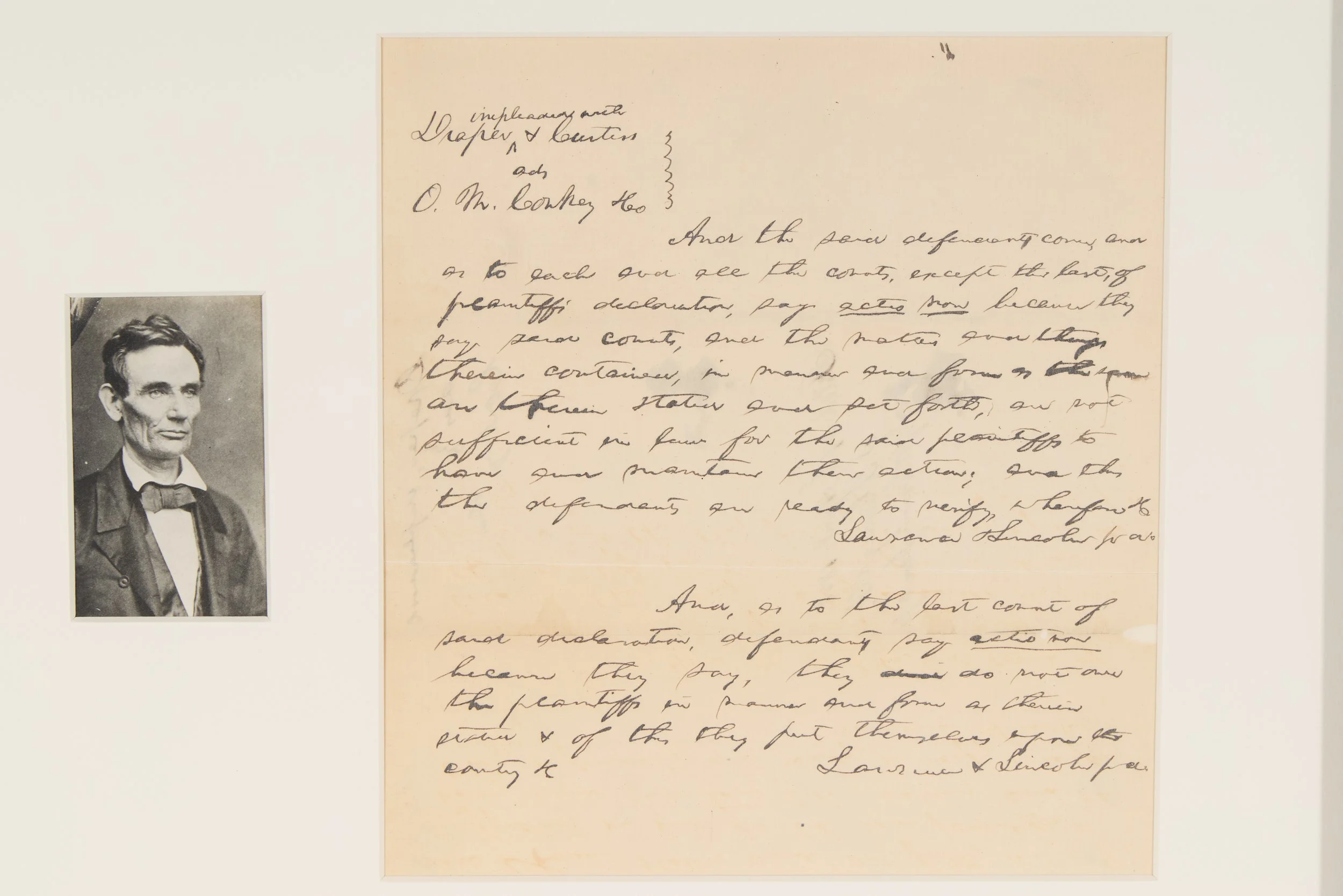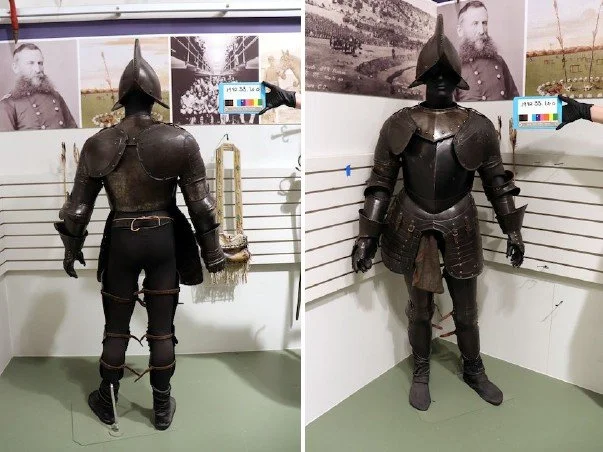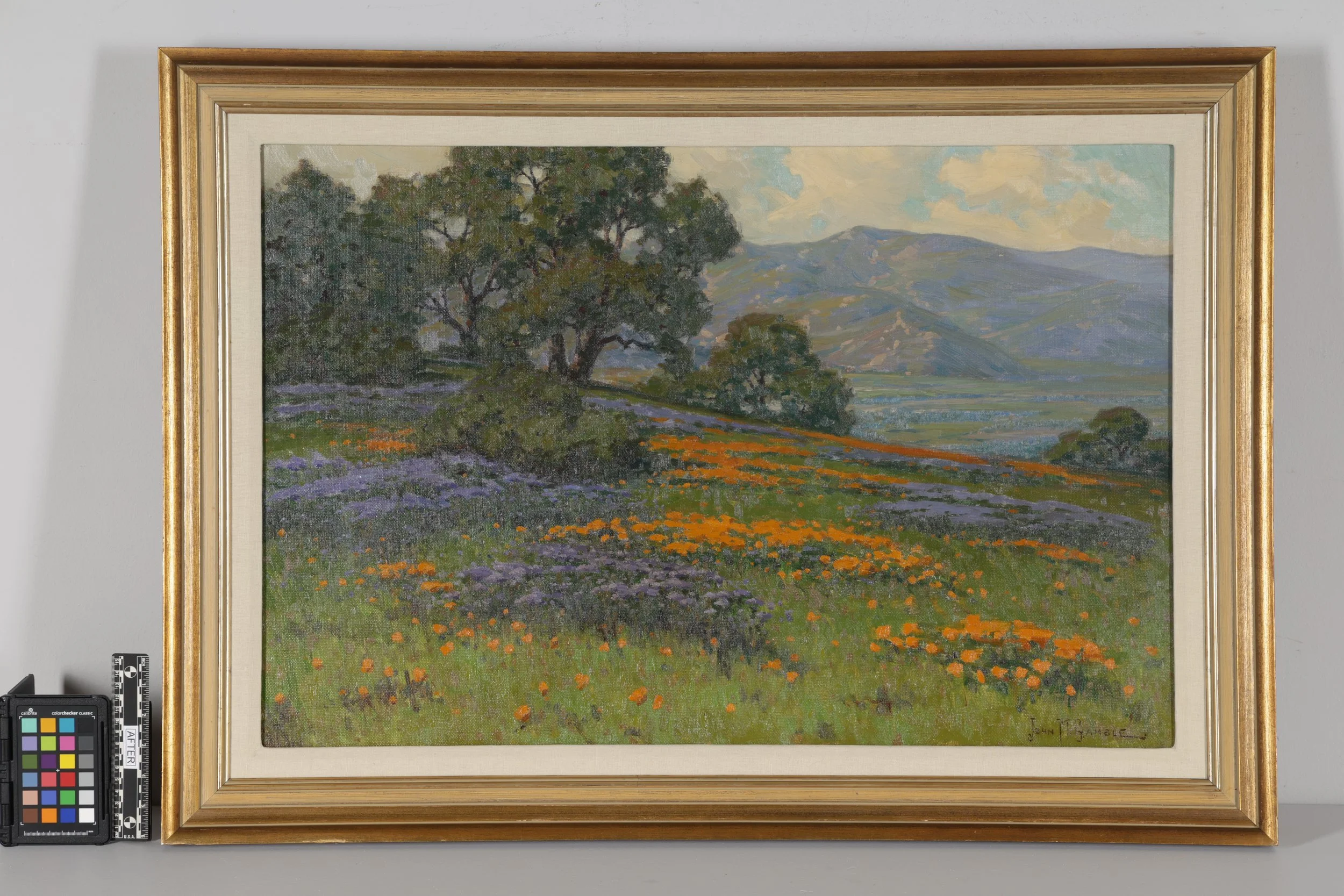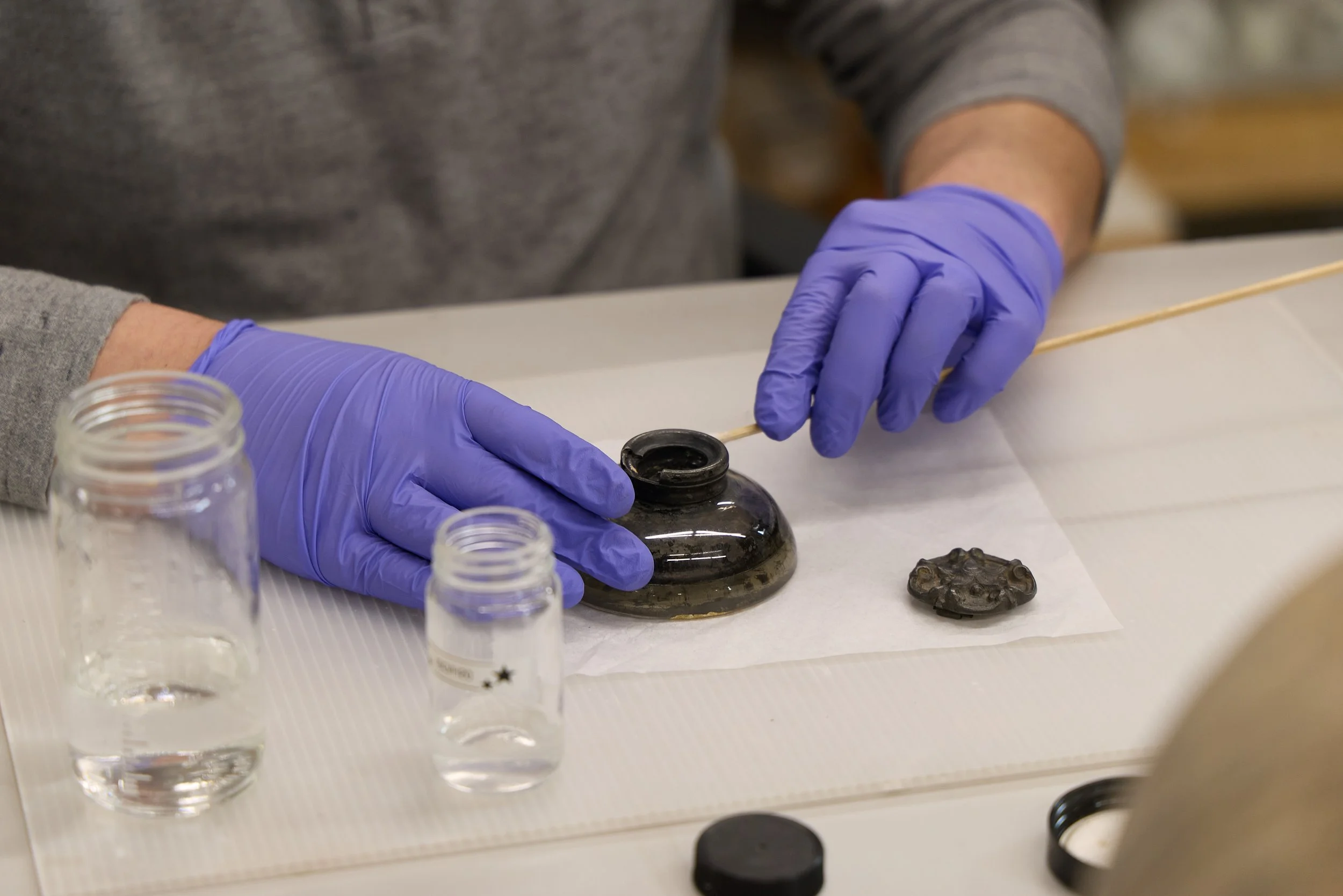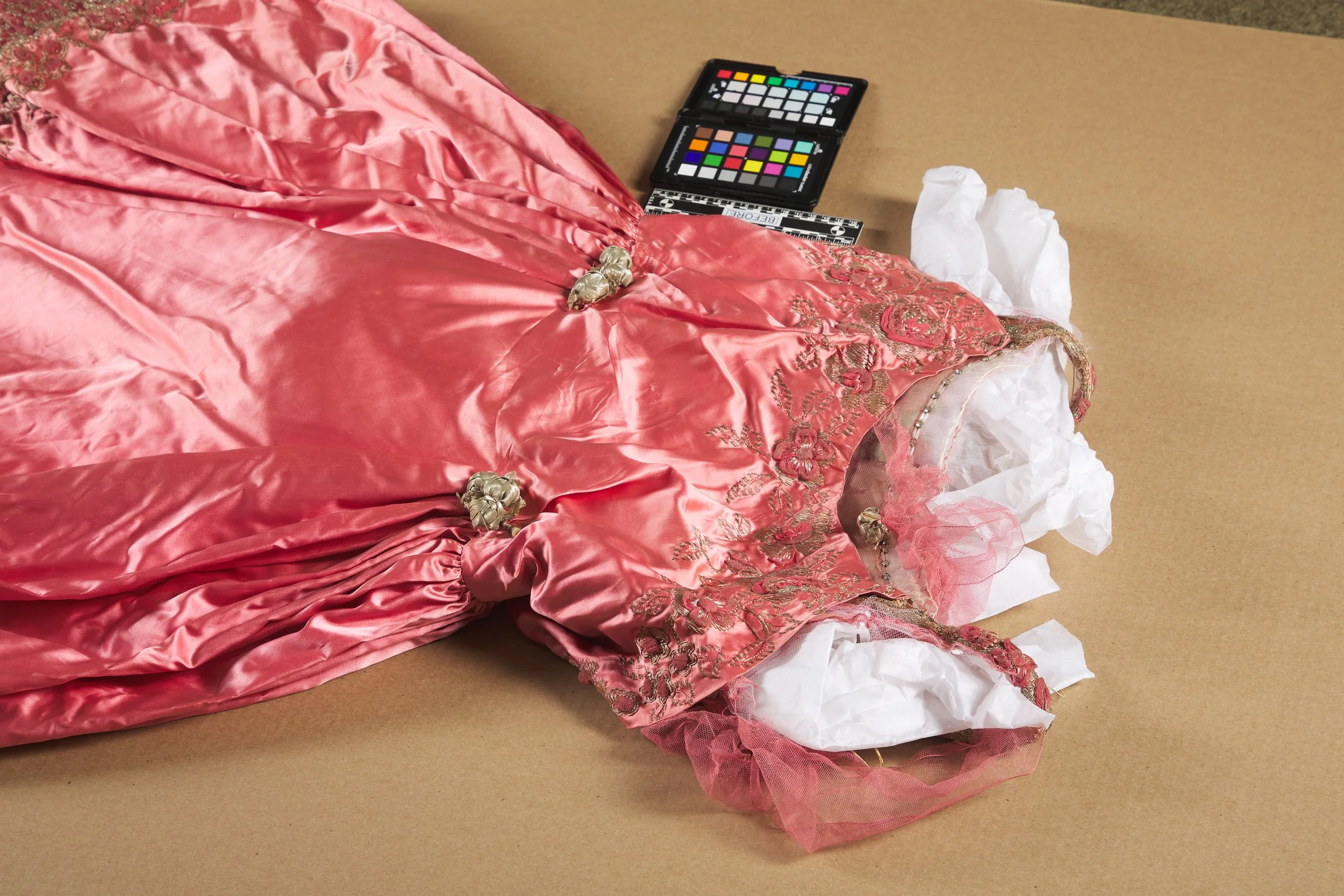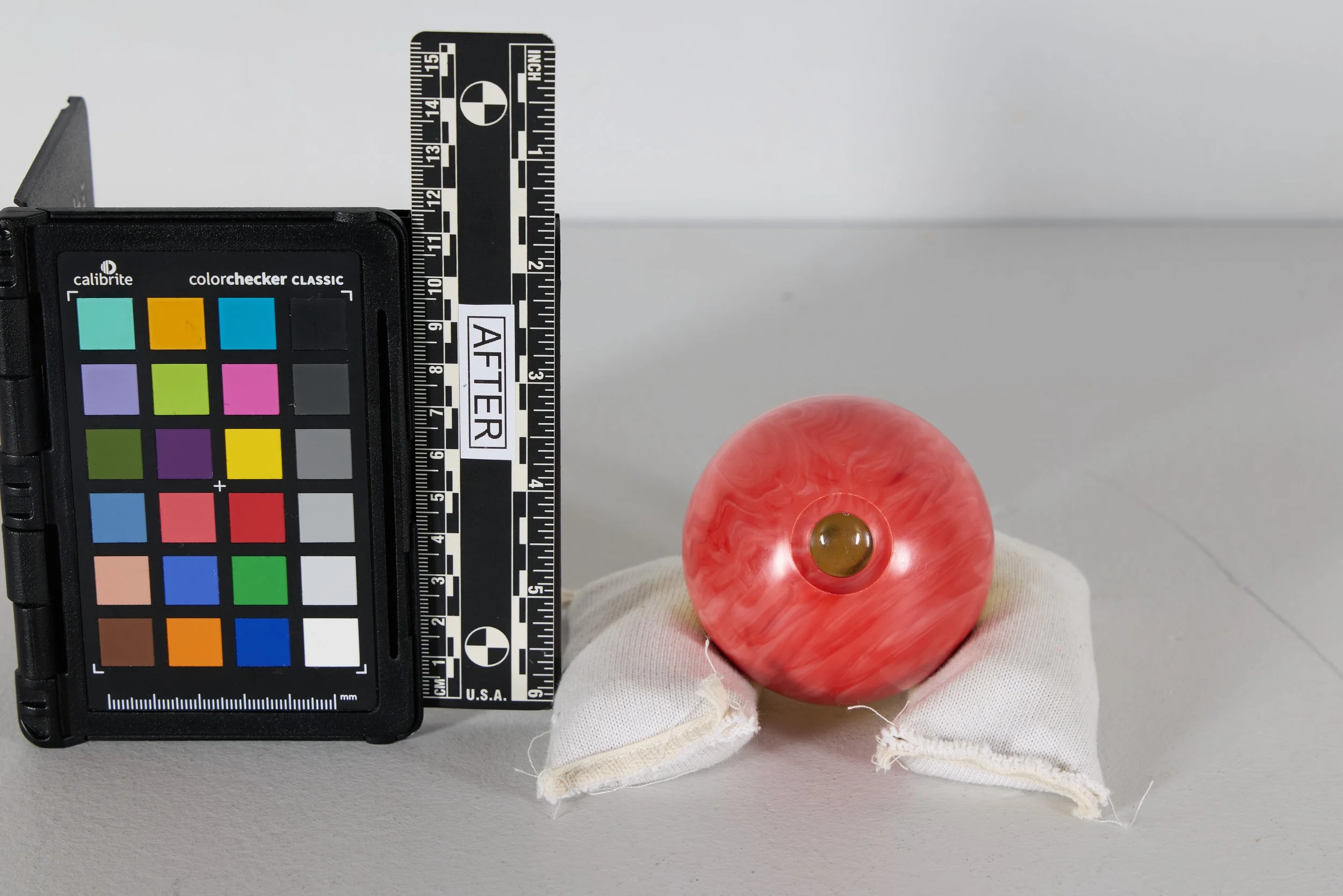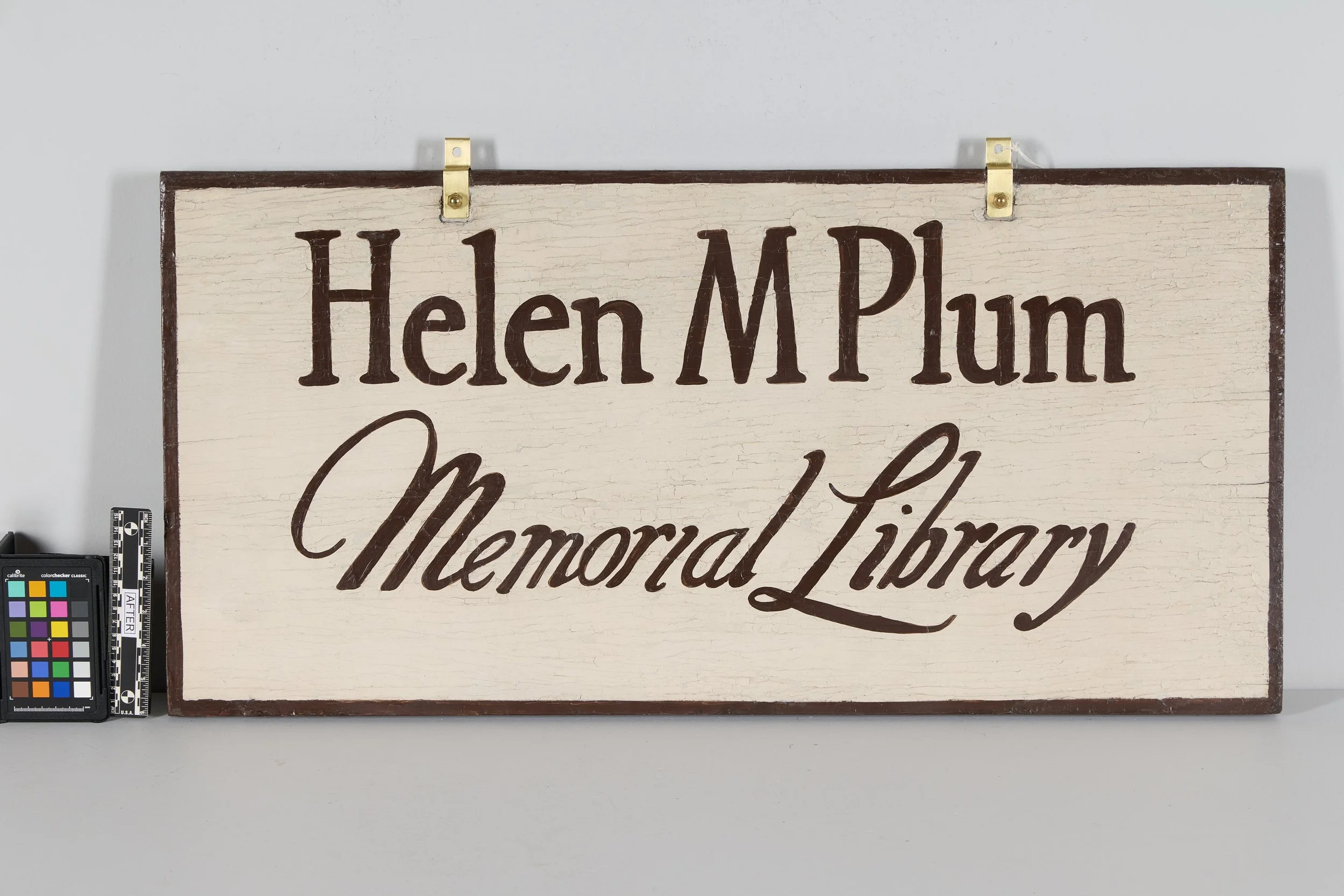
Few objects in American sports carry the symbolic weight of the Vince Lombardi Trophy, awarded to the winning team of the Super Bowl each year. The Conservation Center recently had the honor of treating two commemorative, player-owned versions of the Lombardi Trophy belonging to Chicago Bears legend Gary Fencik. Both objects date to the Bears’ historic 1985 Super Bowl victory and were produced to commemorate that championship season.
Part II: From Treatment to Digital Access — Preserving a Ledger for the Future
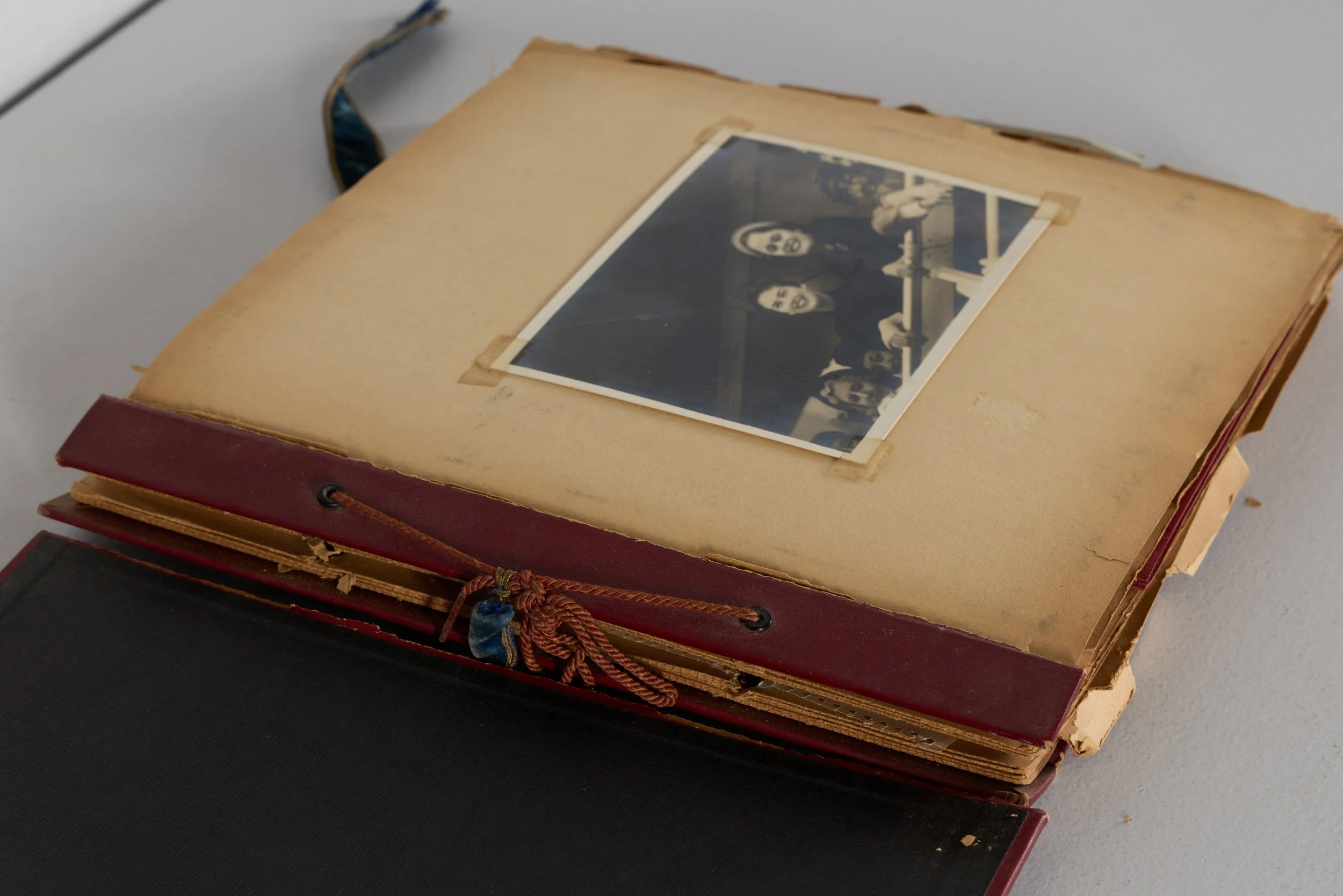
After the careful repairs described in Part I, which addressed deep creases, weakened bindings, and worn covers from years of use, the ledger was ready for the next stage: digital preservation. Once stabilized and safe to handle, our team focused on capturing its pages in ways that ensure access for generations to come.
A Glimpse Inside Chicago’s Gilded Age
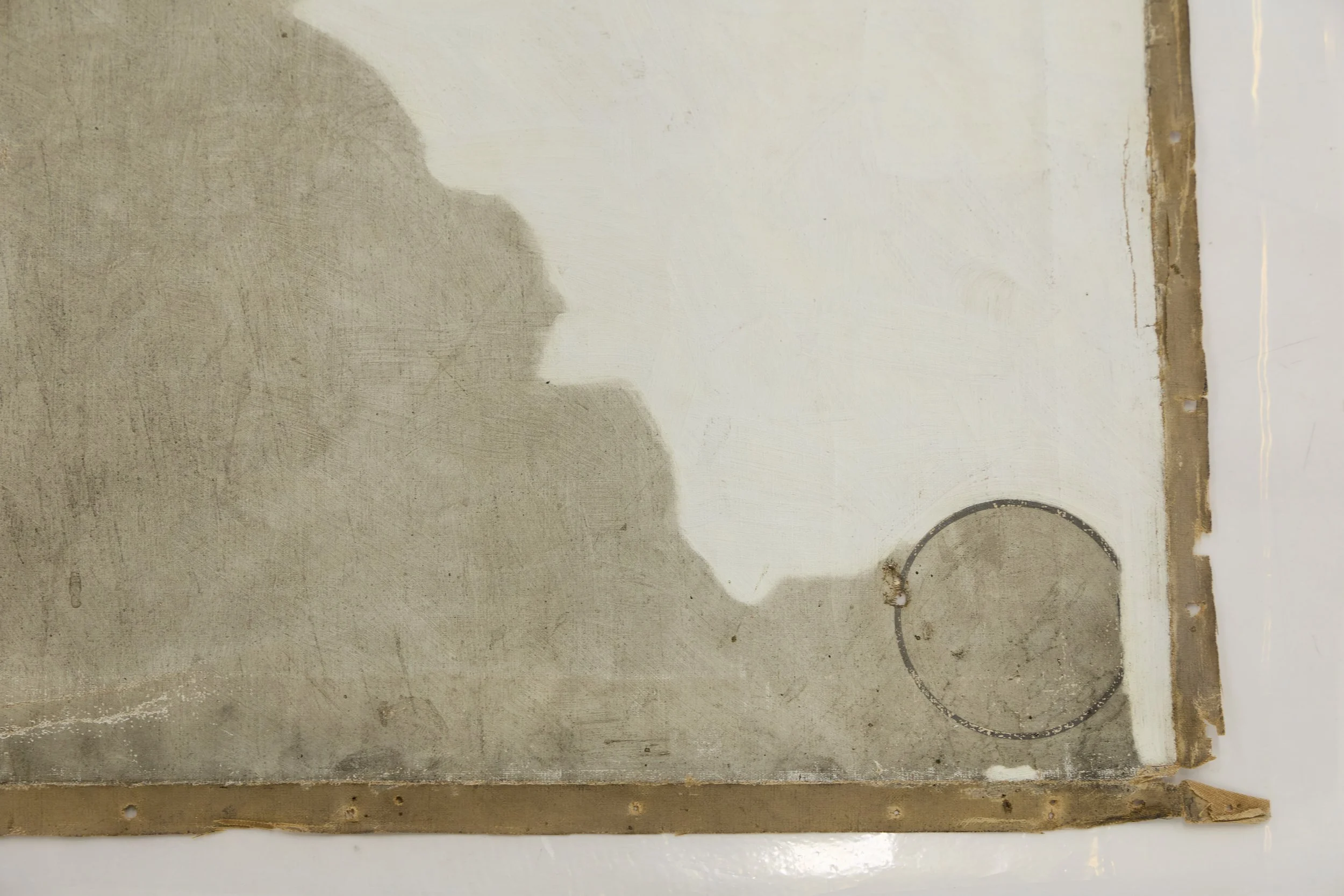
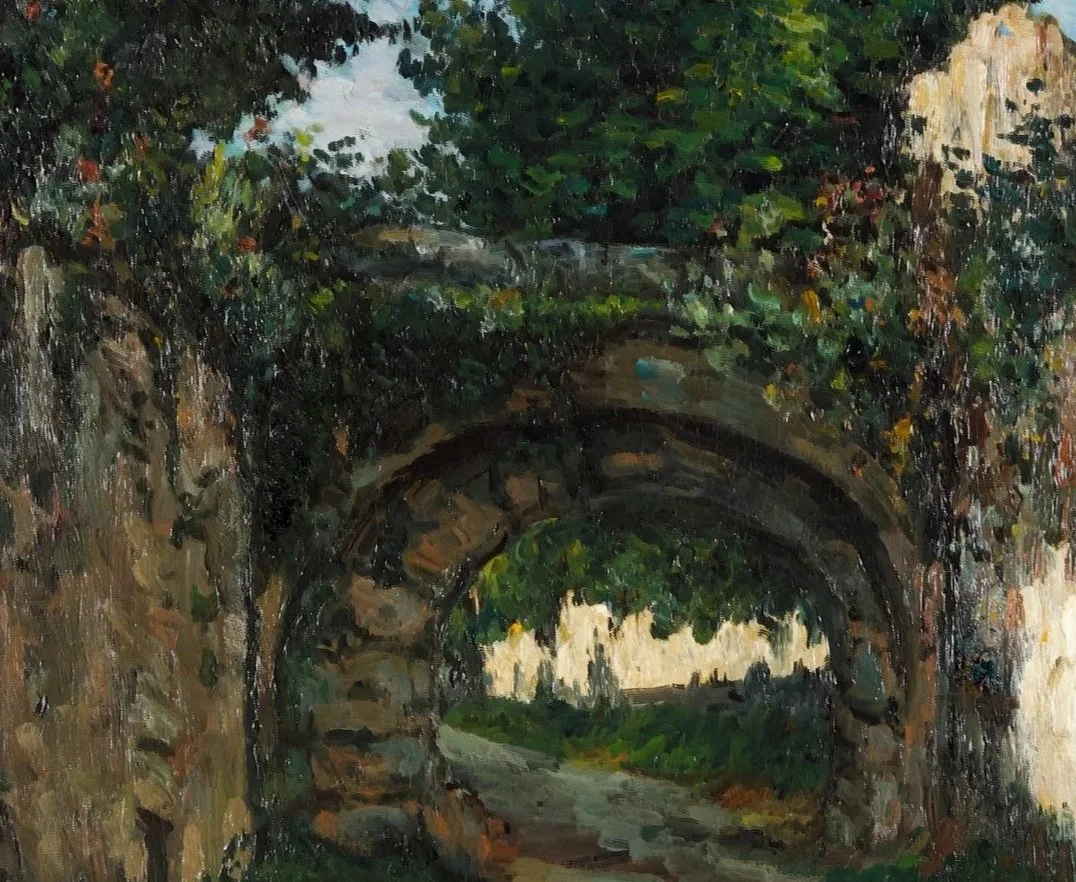
A recently conserved painting by Edward J. Holslag (American, 1870–1935) offered a vivid glimpse Chicago at the height of its Gilded Age -- when grand hotels dazzled visitors, decorative painting filled expansive interiors, and artists were called upon to match the city’s architectural ambition stroke for stroke.
Focusing on Gratitude and Legacy: A Letter from Heather Becker, CEO
Miniature Marvels from the Annual Staff Art Contest
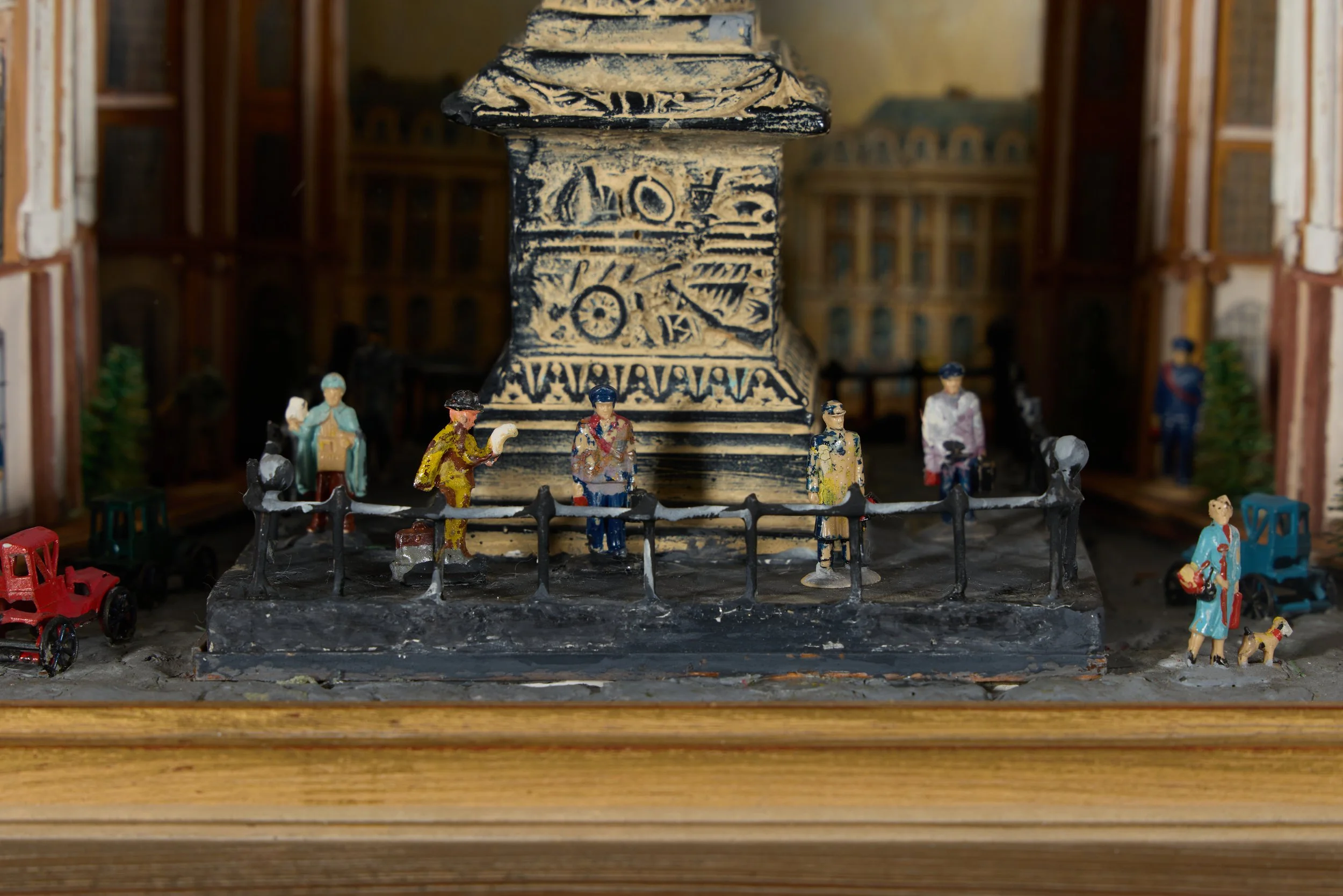
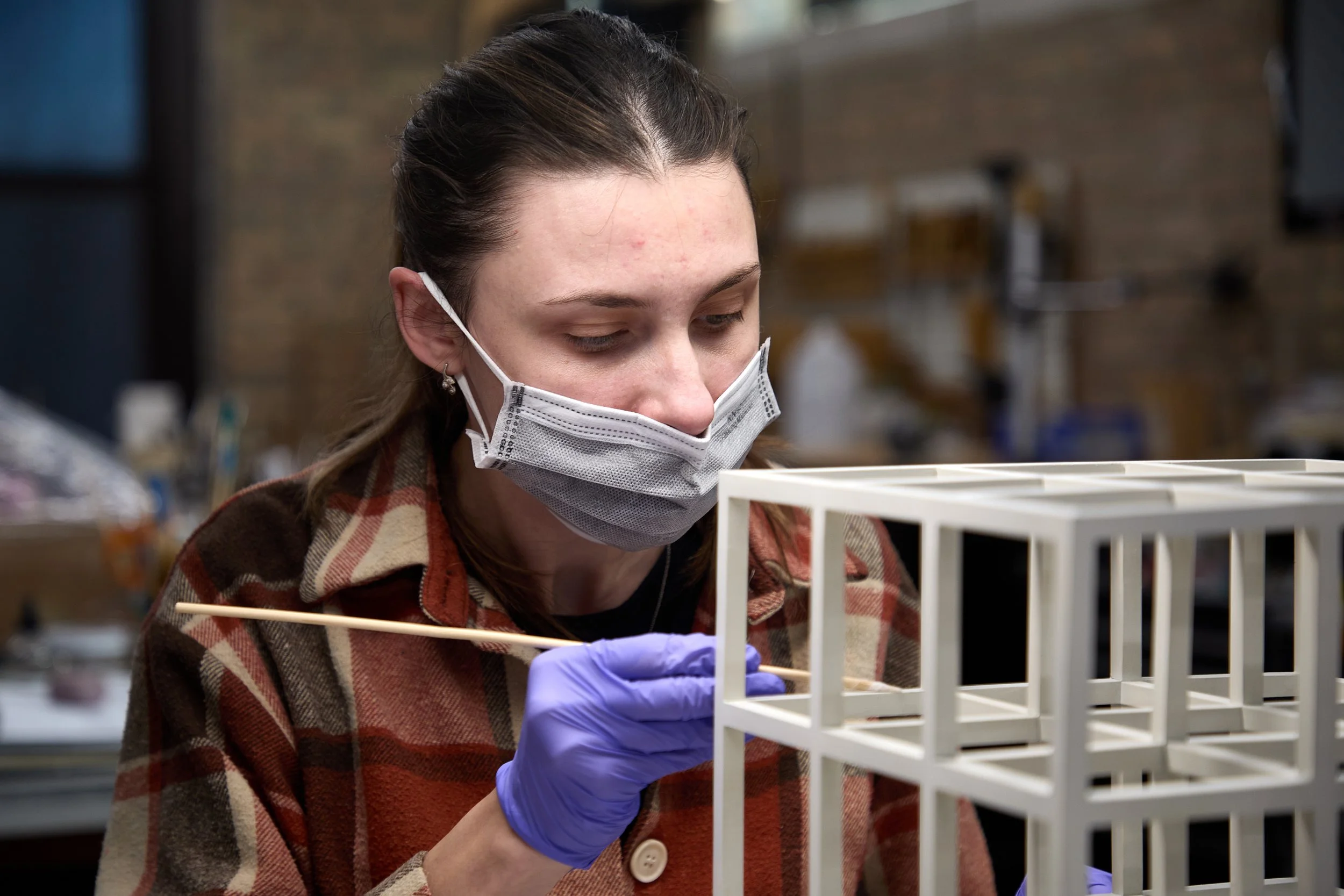
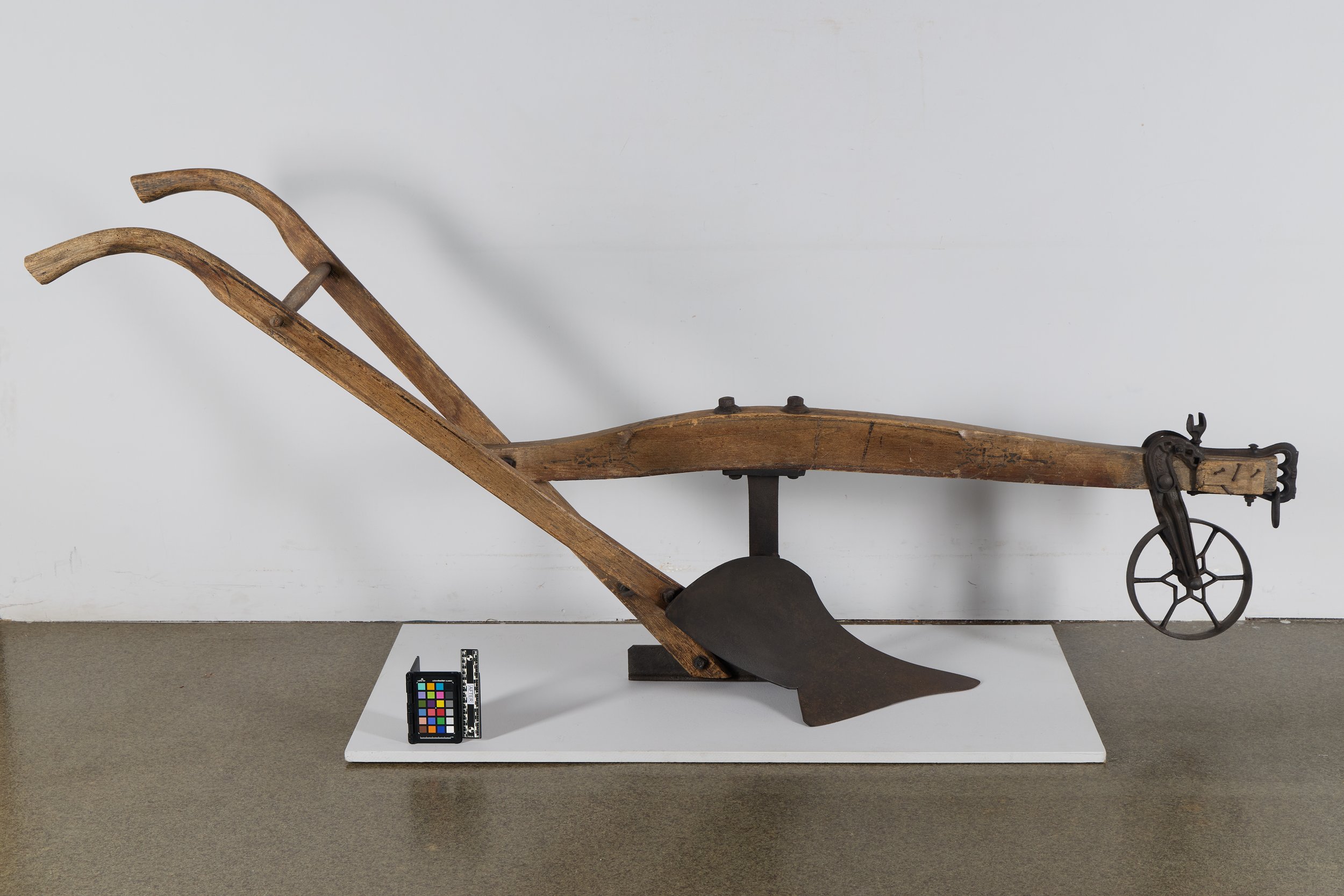
Earlier this month, The Conservation Center held our annual staff art contest, offering a glimpse into the creative practices that so often extend beyond our day-to-day conservation work. Many members of our team are artists, makers, and designers in their own right, and this contest is always a reminder of the breadth of talent and imagination within our walls. We’re delighted to share a selection of this year’s entries!
Part I: Bringing a 200 Year Old Ledger Back to Life
This month, we’re taking readers behind the scenes of a remarkable 19th-century ledger from a longstanding corporate collection, an object that has quietly survived nearly two centuries of use, storage, and changing hands. Bound in worn leather and filled with handwritten entries tracking transactions from 1848 to 1852, the ledger is not only a piece of institutional history but a tangible record of the people who kept those early operations running. As more companies recognize the cultural and research value within their archives, projects like this show how conservation protects materials that help tell their story.
Caring for Curry: A Renewed View of a Madison Landscape
We recently had the honor of treating a painting titled Madison Landscape by John Steuart Curry from the Madison Museum of Contemporary Art ; the painting is part of MMoCA’s permanent collection and will be featured in their upcoming exhibition A Broad Sweep of Sky, which explores how Regionalist artists of the 1930s and 1940s helped define a distinctly American, place-based visual identity.
"Ask a Conservator Day" Recap 2025
We were thrilled to join conservation professionals worldwide for Ask a Conservator Day, an annual event held by the American Institute for Conservation each November in remembrance of the 1966 Florence flood. That disaster not only threatened countless works of art but also sparked a global, collaborative effort that helped shape the modern field of conservation. In that spirit, we opened up our Instagram Stories for a day of questions and conversation, sharing a behind-the-scenes look at our work and answering anything our community was curious about.
The Desk, the Conservator, and the Wardrobe
The Marion E. Wade Center at Wheaton College in Wheaton, Illinois, is a major research collection dedicated to the works and legacies of seven British authors. Recently, The Conservation Center was honored to conserve several remarkable pieces connected to two of the most influential figures in fantasy literature: C.S. Lewis and J.R.R. Tolkien.
Layers, Surface, Structure: Treating a Work by John La Huis
The Conservation Center recently treated a mixed-media painting by Miami-based artist John La Huis, whose practice embraces layered surfaces, diverse materials, and a highly textural approach to mark-making. La Huis often combines oil paint with materials such as resin, fabric, paper, and industrial media, building and reworking his compositions until gestures, textures, and fragments of imagery settle into place.
ARTnews Top Art World Professionals: The Conservation Center
We’re honored to be named among the 145 Top Art World Professionals according to ARTnews, and once again, we’re in great company.
Framing The Histories: Kerry James Marshall at the Royal Academy
The Conservation Center had the honor of collaborating with Kerry James Marshall to craft artist’s frames, built precisely to his specifications, for his newest series, Africa Revisited. These works are part of The Histories, his landmark exhibition now on view at the Royal Academy in London.
Checkmate! Treating Puzzle-Ball Chess Pieces
The Conservation Center was recently entrusted to conserve a remarkable set of carved chess pieces, each distinguished by its intricate puzzle-ball finial base and finely detailed figures. These pieces are not only functional objects but also extraordinary works of craftsmanship that reflect a long tradition of skilled artistry and global appreciation for the game of chess.
Top Drawer Treatment: Conserving a Cabinet-on-Chest
The Conservation Center recently treated a finely crafted cabinet-on-chest, complete with its original key. Traditionally, a cabinet-on-chest combines a chest of drawers at its base with a smaller cabinet or cupboard above. Distinguished by its glazed doors, veneered surfaces, and turned details, this example once served not only as practical storage but also as a showcase of craftsmanship in the home.
The Conservation Center and the Barker Mansion: Preserving a Gilded Age Legacy
A Glimpse into Rubens’ Intimate World
Peter Paul Rubens, Flemish (Siegen, Westphalia 1577 - 1640 Antwerp, Belgium) one of the great masters of the Flemish Baroque, is celebrated for his vibrant, dynamic compositions and masterful portrayal of the human figure. Among his more personal works are depictions of domestic life, including his famous Honeysuckle Bower, which portrays Rubens and his first wife, Isabella Brant, in a private, tender moment beneath a trellis of honeysuckle. This engraving, created by Carl Ernst Christoph Hess, German (1755 - 1828) after Rubens’ original, translates that intimate domestic scene into the precise language of printmaking. The careful linework and subtle shading preserve the warmth of Rubens’ composition while making it accessible to collectors and institutions alike.
A Collector’s Discovery: Conserving a Luigi Olivetti Seascape
While browsing an antique store, our clients came across a painting that immediately drew their attention. The scene had an undeniable sense of calm and atmosphere, even though age had obscured much of the artist’s intent. Following the advice of their interior decorator and trusting that something remarkable was beneath the surface, they brought the work to The Conservation Center for treatment.
Once Upon a Dream: Conserving a Prototype of Fantasyland’s Crown Jewel
Long before the Sleeping Beauty Castle opened its drawbridge to the public, it took shape on a workbench. Crafted in 1953, this architectural model reflects the earliest iterations of Disneyland’s most iconic structure: a castle that would soon become the visual and visceral centerpiece of the park.
Good Boy, Good Butter: Restoring a Rare Dog-Powered Churn
In the late 19th century, a clever yet slightly eccentric contraption promised to spare farmers the hard, repetitive labor of churning cream. The device? A wooden treadmill connected to a butter churn, powered not by electricity or steam, but by a dog. Recently, The Conservation Center had the opportunity to stabilize and preserve one of these rare butter churns from the Museum of the Grand Prairie, a facility of the Champaign County Forest Preserves. Donated to the museum by William S. Redhed in 1968 as the part of the museum's founding collection, it remains one of the larger artifacts they hold. With its slatted wooden belt, iron flywheel, and battered churn barrel, the piece arrived with history etched into every part -- and plenty of conservation challenges to match.
Making More Room for Masterpieces
We’re growing again! Over the past several months, The Conservation Center has expanded its footprint with the addition of a new 9,000-square-foot storage facility. This brings our total space across the company to over 40,000 square feet under one roof—allowing us to better serve private collectors, institutions, and institutions with premium storage options tailored to the unique needs of fine art and heirlooms.